How much does alloy wheel refurbishment cost in the UK?
Auto Express puts the average cost of repairing and refurbishing an alloy wheel at about £50 to £120 per wheel, and the things that…
Read guide →
Home / News & guides / 21 November 2026
The driver who was reversing is often held at fault, because the Highway Code puts the duty to look on them and the courts treat reversing as carrying a higher duty of care. It isn’t automatic: the insurers decide on the evidence, and when both cars were reversing, the claim is often split 50/50. Dashcam footage, CCTV and witnesses are what usually settle it.
Rules 200 to 203 of the Highway Code cover reversing:
Most of these rules say “should”, not “must”, but that doesn’t make them optional. The Highway Code’s introduction says it can be used in evidence in court to establish liability, including rules with advisory wording.
Rule 202 makes the person reversing responsible for checking the space behind the car. In a 2016 decision, the Financial Ombudsman Service said it is “well-established in the courts that a reversing driver has a higher duty of care than other drivers”.
In that case, a driver reversing out of a car park space was hit by a car going the wrong way round a one-way system, and the other driver admitted blame at the scene. The reversing driver was still held liable, and the ombudsman found it reasonable for his insurer not to fight it. It also noted that a one-way sign in a car park doesn’t have the same effect as one on a public road.
The ombudsman doesn’t decide who caused an accident. It checks whether the insurer acted fairly, and most policies let your insurer settle a claim even if you disagree.
In that same decision, the ombudsman accepted there may be situations where a reversing driver isn’t held liable, and said it’s for the insurer to judge whether special circumstances give it a realistic defence. Without something that clearly shows the other driver caused it, the reversing driver’s duty to look usually decides it.
If someone reversed into you, the same rules work in your favour. In a decision issued in January 2026, a driver reversed into a car that had pulled out of its space and stopped behind her. Her insurer first disputed liability, then accepted it in full after seeing the other car’s dashcam footage, and the ombudsman found that fair. See what happens to your car when the accident wasn’t your fault.
Two drivers back out of facing bays and meet in the middle. Rule 202 applies to both, so neither can easily say the other should have looked.
The ombudsman looked at exactly this in 2022. Both drivers had been reversing out of spaces, there was no camera covering that area and no witness. The insurer offered to settle 50/50, and the ombudsman found that fair. The driver argued the other car had been parked where it shouldn’t have been, but she still had to make sure her path was clear before reversing.
A split claim is usually recorded as a fault claim, because your insurer can’t recover all its costs. The Financial Ombudsman Service says an unprotected no-claims bonus is normally reduced by 2 years after a fault claim. The driver in the 2022 case lost her no-claims discount and her premium rose at renewal.
When the ombudsman reviews a liability decision, it looks at the drivers’ accounts, witness statements, engineers’ reports and CCTV. Collect what you can on the day:
If a light is broken, the bumper is hanging, a panel is rubbing on a wheel or a warning light has come on, don’t drive the car. Arrange recovery. Our car park accident guide covers the scene in more detail.
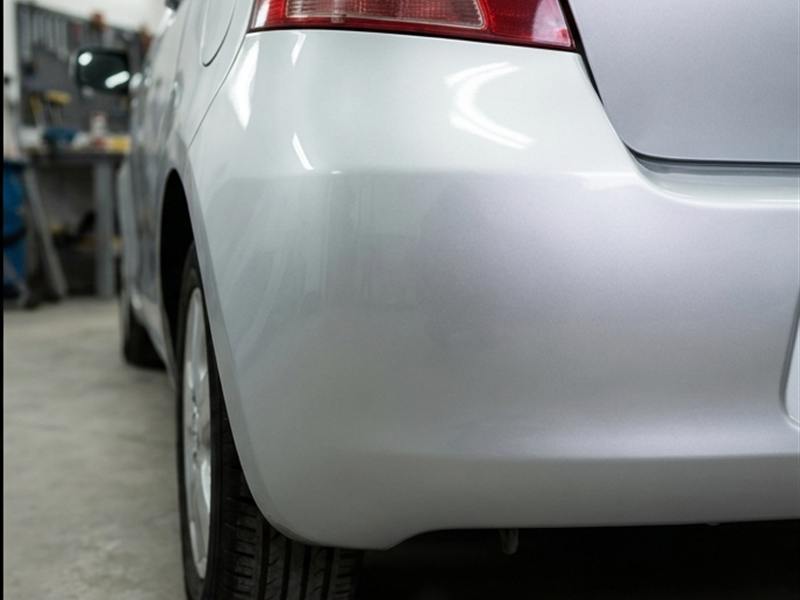
Most reversing knocks end up on a bumper. Thames Autos is a trusted bodyshop at 1A Spencer Road, Seven Kings, and we repair or replace bumpers, including plastic bumper welding. Most scuffs and cracks are done in 1–2 days. We’re insurance approved and deal with your insurer on the repair side, and free courtesy cars are available on qualifying insurance repairs (T&Cs apply). If the car isn’t safe to drive, we can collect it. Send photos through our contact page or call 0208 597 7639, Monday to Friday 8am–6pm and Saturday 9am–2pm.
This is general information, not legal or insurance advice. Last checked against the sources above on 15 November 2026.
Auto Express puts the average cost of repairing and refurbishing an alloy wheel at about £50 to £120 per wheel, and the things that…
Read guide →Usually not, if the repair costs little more than your excess. Once you count the no-claims discount you could lose, a small claim can…
Read guide →