How much does alloy wheel refurbishment cost in the UK?
Auto Express puts the average cost of repairing and refurbishing an alloy wheel at about £50 to £120 per wheel, and the things that…
Read guide →
Home / News & guides / 16 November 2026
After a car park accident, stop, check nobody is hurt, swap names, addresses and registration numbers, and photograph both cars and the bay layout before anyone moves. Fault is decided by the insurers from the evidence, so ask about CCTV and witnesses straight away. A car park can feel less formal than a road, but in most cases the same road traffic law applies.
Usually, yes. The Highway Code explains that “road” in law includes many roadways and driveways on private land, including many car parks, and that in most cases the law applies to them. Some serious offences, such as drink-driving, apply in all public places, including public car parks.
GOV.UK also says you must have motor insurance to use a vehicle on roads and in public places. So the other driver in a public car park should be insured, and the usual duty to stop and give details normally applies.
The rest of the process is the same as any collision. Our step-by-step guide to what to do after a car accident covers it.
Came back to a dent with nobody around? See our guide to what to do if someone hit your parked car. It covers notes, witnesses, police reports and who pays.
If the other driver leaves without giving details, note their registration, make, colour and the time. Report it to the police on 101 or online. The MIB says a hit-and-run must be reported to the police within 14 days, even if you claim later.
The Highway Code rule is the same as on the road. If you don’t give your details at the time to someone entitled to ask for them, you must report the collision to the police as soon as reasonably practicable, and within 24 hours at most. Leaving a note is sensible, but it isn’t the same as giving your details to someone at the time, so report it to the police as well.
There’s no separate rulebook for car parks. Fault comes down to evidence: each driver’s account, witness statements, engineers’ reports and CCTV are what the Financial Ombudsman Service checks when it reviews an insurer’s decision. Most policies also let your insurer decide whether to accept liability.
The Highway Code carries weight here. It can be used in evidence in court to help establish liability, including its advisory “should” rules. On reversing, it says you should look carefully before you start, use all your mirrors, check the blind spot and reverse slowly while checking all around (rule 202). You must not reverse further than necessary (rule 203).
Our guide to reversing accidents explains why the reversing driver is usually held at fault, and when that changes.
When the accounts conflict and nothing settles who was to blame, insurers sometimes agree to split liability 50/50. The Financial Ombudsman Service found that reasonable in one disputed case where neither a loss adjuster nor an engineer could decide who was responsible. A split claim is recorded as a fault claim, because your insurer can’t recover all its costs. If your no-claims bonus isn’t protected, a fault claim normally reduces it by 2 years.
Ask quickly. The ICO, the UK’s data protection regulator, warns camera operators that footage kept for a set period can be deleted routinely, and says it’s good practice to stop that once a request arrives.
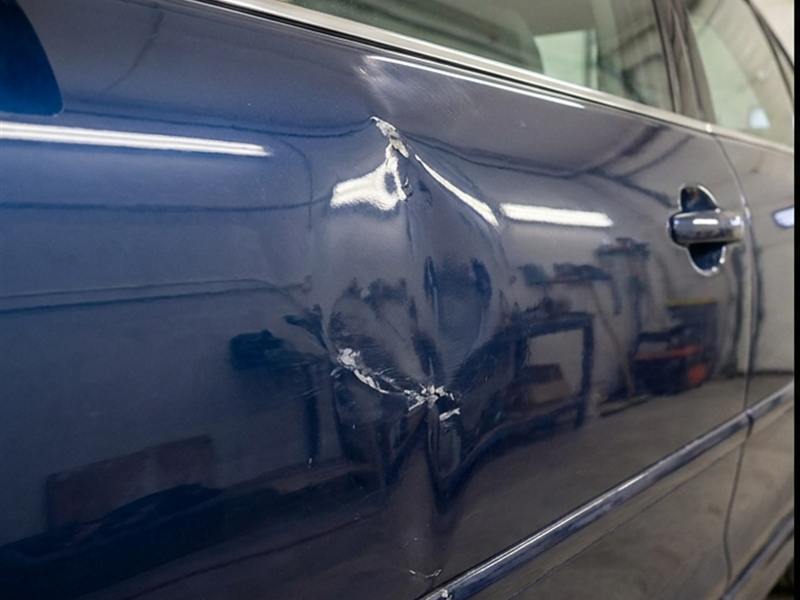
Get a repair price first. Which? points out that the closer the claim is to your excess, the less there is to gain from claiming. If the damage is a scuffed or cracked bumper or a dent in a door or wing, the price may be close to your excess.
Reporting an accident without claiming shouldn’t affect your no-claims bonus, as long as the other driver doesn’t claim against you. Your premium can still rise at renewal, because insurers take reported incidents into account.
If a light is broken, a wheel or tyre took the impact, a panel is loose or rubbing, or a warning light has come on, don’t drive it. Arrange recovery instead.
Thames Autos is a trusted bodyshop in Seven Kings, Ilford. Most scuffs and cracks are done in 1–2 days, and free courtesy cars are available on qualifying insurance repairs (T&Cs apply). Send photos of the damage through our estimate form or call 0208 597 7639, Monday to Friday 8am–6pm and Saturday 9am–2pm.
This is general information, not legal or insurance advice. Last checked against the sources above on 14 November 2026.
Auto Express puts the average cost of repairing and refurbishing an alloy wheel at about £50 to £120 per wheel, and the things that…
Read guide →Usually not, if the repair costs little more than your excess. Once you count the no-claims discount you could lose, a small claim can…
Read guide →